The Solar Kingdoms

The largest and most organized political body in the solar system are the Solar Kingdoms of Mitrakam. Led at the top by the most exalted head of the (orthodox) church, the Prophet of the Faith: the Thearch of Mitrakam rules from the city of Sanctuary on the moon of Aruna. Below the Thearch rank the members of Parliament which meets on the moon of Dhumala, sitting in the House of Lords or the House of Commons. Membership is by election by the eight Kingdoms (Kaikasi and its moons), two Dominions (the Kravyad inner worlds of Maricha and Subahu), and two Provinces (one for the military protectorate of Raka, one for the collection of provincial worlds in the Yami Belt).

Life in the Kingdoms is relatively prosperous, assuming you are willing to play by the rules. Food, shelter, and healthcare are assured for all citizens, regardless of race, species, or religious affiliation. While family and caste play a large role in determining personal wealth; there are no slaves, indentured servants, or even worker class, given the advances in Technik and Sādhanā provided by the church to society.

Those who argue otherwise are malcontents, anarchists, or worse: atheists. They all come running for protection when the demons of the long night begin their raids, though. Then there are few enough arguments against the taxes and bureaucracy that sustain the Solar Navy, and the advanced Technik capabilities that maintain intrasolar commerce throughout the system.

Episode Four, Scene Zero

Setting:

The Circuses at Hanuruha (early enough in the day that the matches are non-lethal, late enough that there is still a boisterous crowd). Captain Chabra, Gunnery Chief Ns. Kashi, and Gunner’s Mate Aelig Goff.

Ns. Chabra and Kashi are vaguely discomfited by the spectacle of violence in the background, and the pescatarian street food enjoyed by the spectators. The Kravyad battle-witch Goff is made of sterner stuff. Conversation ensues.

“The repairs to the Parindra are complete, but we only have about half the complement of crew that we need. I’ve managed to get an Operation Chief and an Engineering Chief to sign the articles, but we’re still down a chief navigator…besides the captain.”

“We’re going to need a new name for the ship, you know. We don’t want the naval designation listed on the new letters of marque, I suspect the Governor-Admiral of Betwa will have some objections.”

“We can’t hire a full crew until we get the bounty of a combat action. But we’re not likely to survive a combat action until we have a full crew.”

“So what can we do?”

“Steal one? No, hear me out. Crew is at a premium right now because of the Abhva running slaving operations in the interdicted space been quadrants three and hour of the Yami Belt. So, we stake out the space, and follow a smaller vessel back to their stockyard. Discretely.”

*laughter*

“Well, discretely for us, anyway.”

“It’s a five-thousand metTon ship. It’s just coming out of Dockyard in the new configuration; we’re at half crew, and the half we have is still getting to know their shipmates; and we’ve never worked together as an integrated command staff before.”

“Shakedown cruise?”

“aye.”

“aye.”

Note:

Said shakedown cruise did not result in any damage, but did reveal the limits of non-stealthship “discretion”.

The Kravyad

The Kravyad (“Raksasa”, to the invaders) are the aboriginal native inhabitants of the Surya system. Though once possessing art, culture, and sciences of their own, what remains are mere echoes, distorted through the lens of Janya expectation. By some accounts, the role of the Kravyad people in the Solar Kingdoms is to be exploited as disposable labor and to act as a secondary market for Janya goods.

Kravyad Physiology

The Kravyad originally evolved from Alpine ruminants on the world of an Domhan, similar to a cross between a silverback gorilla and a goat. Eyes are somewhat wide-set and possess barred pupils, with visual acuity generally greater than that of Janya adults. The males have chins spurs, beards, shorter straight or slightly curved horns, and long braided hair; the females have somewhat noticeable tusks, horns that curve close to the skull, and fine, short hair on their heads (less than 1 cm long) that is essentially fur.

Skin color ranges between matte tones of pale gray, beige, or tan. Hair is yellowish-blonde, reddish orange, or a rich brown that looks like teak. Females tend to have hair that’s lighter, males tend to have hair that’s darker (and as previously mentioned, with extended coverage and length)

Kravyad average 175 cm in height, and 110 kg in mass. Females tend to mass slightly less, and stand slightly taller.

Kravyad Social Classes

see Tuathanach and Ban-draoidh

Kravyad

Subahu

Subahu is the second closest world to Surya, the primary sun of the Mitra system.

Mean Orbital Distance:285 million km
Days to Orbit:784
Mean Radius:9,537 km
Surface Area:1.14 billion km2, Landmass 686 million km2
Base Temperature:22.8° C
Seasonal Variation:32.8° C (High), 17.3° C (Low)
Average Annual Precipitation:130 cm
Significant Imports:Machinery (2.5 MMT), Medicines (2 MMT)
Significant Exports:Organics (14 MMT), Consumer Items (5 MMT)

A colony world of the Janya, inhabited by the natives to the Surya system, the Kravyad. Subahu is home to a boreal climate, and an economy based on industrial manufacturing and resource extraction. To the Kravyad, this world is an Domhan.

Subahu is a Dominion of the Solar Kingdom, and its capital is Ketumat (“endowed with brightness”). Major cities include Bahuratna, Bhrajin, Hatya, Iditr, Jaghabala, Ketumat, Lalitapriya, Nipalazam, Papacara, and Prakaroti. A single great moon orbits Subahu, Tataka.

Maricha

Maricha is the closest world to Surya, the primary sun of the Mitra system.

Mean Orbital Distance:150 million km
Days to Orbit:420
Mean Radius:7,944 km
Surface Area:792 million km2, Landmass 491 million km2
Base Temperature:30° C
Seasonal Variation:38° C (High), 24° C (Low)
Average Annual Precipitation:75 cm
Significant Imports:Machinery (2.5 MMT), Medicines (2 MMT)
Significant Exports:Organics (14 MMT), Consumer Items (5 MMT)

A colony world of the Janya, inhabited by the natives to the Surya system, the Kravyad. Maricha is home to a temperate climate, and an agriculture based economy. To the Kravyad, this world is known as Taise.

Maricha is a Dominion of the Solar Kingdom, and its capital is Pak Sacara. Major cities include Bal Ivarda, Karaja, Ksauri, Murdhan, Naka, Nikrandati, Rahi Karoti, Sakhila, Sar Agata, Sauv Ira, and Zil Ajit. Two moons orbit high above Maricha: Malada and Karusha.

Primitive Tech and Solar Travel

The Primitive Tech equivalents of Radium Drive and Empyrean Sail are Nuclear Thermal Propulsion and Nuclear Thermal Propulsion (redundancy intentional).

Cutting Edge Primitive Tech (CEPT) uses alchemically enriched “clean” uranium fuels. Currently, production is only really implemented at the fighter / shuttle scale (less than 5000 cubic meters displacement), with rated flight times of less than 12 hours before refueling is necessary. Pre-Arrival Kravyad spaceflight used much less efficient fuel (that was additionally much more toxic from a radiation-poisoning perspective), but was used for surface to orbit, and orbit to orbit spacecraft. Even if one of those vehicles were recovered and rehabilitated today (or built by renegade production facilities), performance would only approximate 1/10th that of Empyrean Sail – so a Maricha to Subahu orbit would take on the order of 60 – 100 days instead of the approximate week that the trip take by Empyrean Sail now, with fuel accounting for 90% or more of the vehicle mass.

CEPT designs allow for Andhaka or Outcaste pilots, and the transportation of significant numbers of travelers of either class. CEPT designs in larger scale craft likewise provide for the comfort and safety of those travelers on intrasolar journeys. While unscrupulous transportation concerns may be tempted to falsify the designation, a potential of a dozen Andhaka to destabilize flight control functions tend to keep vendors honest.

Solarship Design Features

  • Solarships have a streamlined silhouette, like a rocket; or better, aquadynamic like a shark or a whale.
  • Solarship have long decks (interior) that run the length of the ship, perpendicular to the usual axis of thrust. So more like a ship than a skyscraper.
  • Solarships usually have a length to beam ratio somewhere between 6:1 to 8:1.
  • Solarships have two means of propulsion: a “Radium Drive” that is reactionless in that it doesn’t expel a propellant to impart motion (think directed anti-gravity, but *thirsty* anti-gravity), and “Empyrean Sails” that displace the majority of a ship’s mass and let it accelerate a fractional speed of light by dipping into subtle energy fields mostly emanated by the sun and gas-giant located in the system. Empyrean sails don’t help in in the solar void between stars, or when your acceleration becomes too much a fraction of your mass.
    1. Note that when there is a catastrophic Empyrean Sails failure, you don’t displace your full mass into realspace; you displace your remaining mass into the dark energy dimension the bulk of your mass was already hiding.
    2. There are Radium Drive Field modules that are external to the ship’s superstructure to generate and harness the inertial field moving the bulk of the ship around, Those modules are probably lit with strange energies, but are going to be reinforced to prevent damage, and to be solidly connected to the structure of the ship since the modules are where the thrust is being generated, and if they’re not solidly attached, they’ll tear themselves loose. The modules are probably as sleek and smooth as the ship itself.
    3. The Empyrean Sail itself is just going to look like a giant magnetic field ten times the size of the ship, catching photons. The Empyrean Sail projectors (or anchors), on the other hand, look roughly like spark plugs extending a significant fraction of the ship’s beam away from the hull. All things considered, they’re probably angled, and they probably extend and retract a fair amount.
  • Solarship weapon systems are kinetic, energetic, or rocket (but not torpedo) based, and all but the smallest are crewed by multiple gunner’s mates each. Given the streamlined nature of the hulls, the systems will be entirely or significantly withdrawn into the hull during normal operations.
  • Solarship design requires Technik to work.

Story Four Outline

Rockets and Mayhem “Privateers and Peril”: Story Four The Magnificent “as many as we can get”.


The Plan

Setting: “The Abhva Triangle”, on the border of Quadrant III and IV of the Yami Belt (out past the regular MSN patrols)

One Scene of naval scale stealth and detection to find an Abhva transit route.

One Scene of disabling a Makara WarCruiser, to obtain the navigational data pointing back at where enslaved Janya and Kravyad captured in battle are being held before being shipped off to the closest (hidden) hiveworld.

One Scene of personal scale stealth and detection to get the assistance of the prisoners in the camp in staging a breakout.

  • If previous scene is unsuccessful, go directly to combat (and a quickly diminishing pool of possible crew)
  • If the previous scene was successful, a social scene for the recruiting of the hostages, and we go straight to the conclusion (success in this scene defines how many prisoners escape / sign articles of agreement).

Yami Belt – The Free City of Hanuruha

The Yami Belt is populated with military outposts, commercial outposts, and the casteless free people of the Janya.

These are the three primary political factions in the Yami Belt:

  • Provincial worlds are allied with the Solar Kingdom, and have political representation in Parliament
  • Independent worlds are the mostly Outcaste City-States that do business with the Kingdom, but are not a part of it
  • Outlaw worlds explicitly prohibit the Solar Navy from their aerospace, and correspondingly enjoy an attitude verging from apathy to hostility (depending on the circumstances).

Most legendary of the Outlaw worlds is the Free City of Hanuruha, and the pirate fleet that defends it.

The founding of the Free City of Hanuruha dates to the earliest construction of the Yami orbital colonies, approximately AY1350. In the half a millennium since then, it has been: lost, overrun, conquered, destroyed, infiltrated, annexed; and in at least one case existed in two separate geographical locations at the same time. Hanuruha endures.

Nominally a city-state of Liberty Utopians, Hanuruha has three defining characteristics (four, if you include “perennially overrun with pirates”).

  • The Hanuruha Authority secures the safety of the people and property located within the Dockyard, for a weekly fee. Solarships are constructed, repaired, upgraded, and resupplied in the Dockyards (with the Authority receiving a percentage of that action as well); frauds, cheats, and thieves who ply their arts in the Dockyard are subject to lethal punitive measures.
  • Products and services from across the system regardless of safety or legality are available at Market, with a singular exception: slavery of either the Janya or Kravyad peoples is prohibited (under pain of death for the slavers). The Hanuruha Authority intervenes only in the case of that singular infraction, otherwise the safety of products and consumers is loosely overseen by the private security of the most established merchants in Market.
  • Dispute resolution between the inhabitants (and visitors) of Hanuruha is the function of Circus. Blood-matches (theoretically non-lethal) and Death-matches (what it sounds like) are contracted by parties in dispute to Circus, who markets viewing, attendance, and gambling on the match. Blood-matches usually pay off to the victor, and Death-matches usually pay off to the beneficiaries of the side that loses.
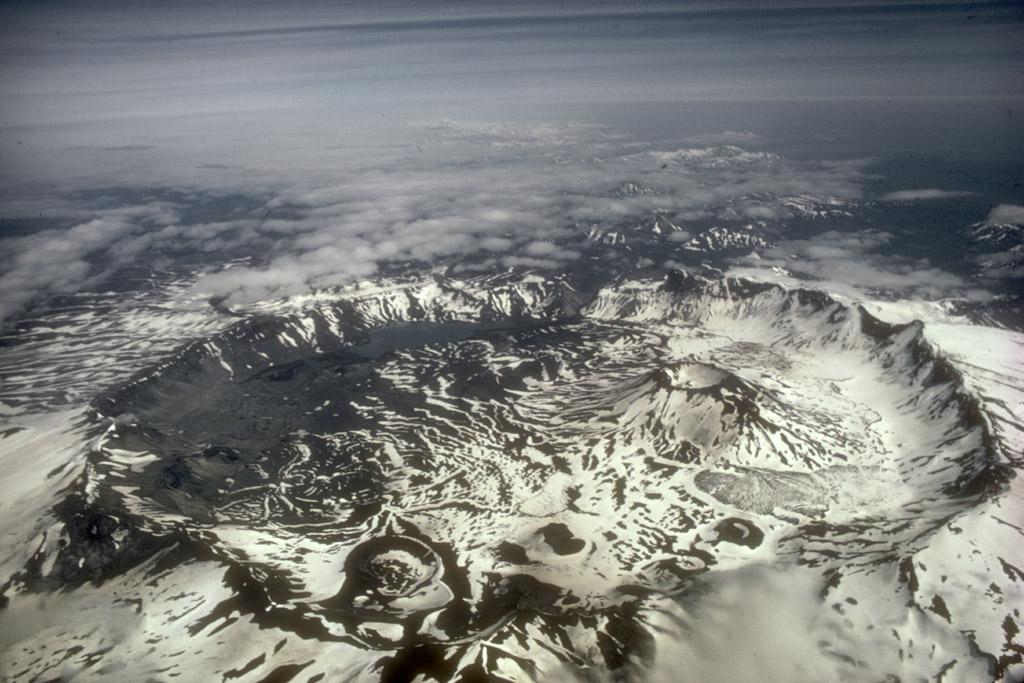
Aniakchak-caldera_alaska

Episode Three, Session Five

Scene 5: Interior, MSN Parindra

(In the access shafts between the Hangar Deck and the Gunnery Deck)

Captain Goff comes aboard the Parindra with a handful of warriors to assist Mala and Chabra in their efforts to subdue the Kravyad pirate interlopers. She attempts to intimidate Lieutenant Guellec, and fails. Mightily.

A firefight breaks out between the privateers attempting to leave the hangar deck, and the pirates disassembling the ships weapon systems on the gunnery deck. Captain Mala has two engineers still out on the propulsion deck. Captain Chabra is down to three gunner’s mates from his ship. Captain Goff has brought along four of her own warriors from her ship.

On the other side: Lieutenant Guellec and a band of 8 Kravyad roughnecks (half of whom are armed with anything more lethal than a spanner).  A minute into the fight, and the Kravyad pirates have disabled the seven reinforcements the Janya have brought with them.

Captain Mala, blazing away with a pistol in each hand, takes out the “unarmed” pirates, although he takes his lumps while doing so. With Captain Goff’s help, the two Captains disable the remainder of the Kravyad boarders, while Captain Chabra employs his spiritualist magic to aid his allies.

Lieutenant Guellec, unfortunately for our heroes, concedes the fight and makes a speedy retreat towards the bridge.

Scene 6: Interior, MSN Parindra

(Onboard the Vatya’s Vengeance, parked on the Hangar Deck; in the ruins of the Parindra Propulsion Deck; among the powerless consoles on the Control deck)

As the Parindra continues to fall in its failing orbit, the privateers coordinate a speedy repair effort.

Captain Chabra, back aboard his Vatya’s Vengeance coordinates stripping the Radium Drive and the lifeblood fuel aboard into the Parindra Engineering section / Propulsion Deck.

Captain Mala and his engineers perform the critical (and terrifically difficult) task of reassembling a Radium Drive powerplant that was field stripped under duress, stabilizing the Radium X fuel, and bringing all of the above back online.

Captain Goff and her warriors are jury-rigging connections on the Control Desk, to get the ship underway as soon as propulsion is available.

Happily, everyone succeeds in their assignments, and the Parindra begins the long, slow trip back to the Free City of Hanuruha.