Rimael Guellec

Lietenant, First Mate to Captain Déorsa Navensi of the Outlaw vessel “Balor’s Fearsome Gaze”*.
Kravyad Tuathanach. Deadly marksman. Athletic, muscular physique. Flashy style, yet fiercely loyal to his captain.
Usually found wielding a coilgun dragoon and wearing a carapace reinforced primitive EVA suit.

Kravyad Boarders:
Usually Good at their job, which involves fighting, shooting, and athletics.
Some are brawlers, some are clever enough to take cover in a firefight.
Generally a pretty forceful bunch.

Setting: The MSN Parindra

Gen2 Light Cruiser Class.

Length: 150m; Beam: 25m; Displacement: 50K m3

Usual complement: 100 crew.


Control Deck (Zone 1)

Fair Cover. Dark. Battle Damaged.

Workstations for Captain, Engineer, Navigation, Weapons, Operations.

Exits to: Astrogation Deck (Zone 2)

There is a Kravyad work-crew here at the start of the scene.


Astrogation Deck (Zone 2)

Fair Cover. Dark. Breach to exterior.

Analog / Optical devices for determining location, plotting the orbital paths of the system, and charting a course between them.

Exits to: Control Deck (Zone 1), Quarters and Storage (Zone 3), Breach (Away).


Quarters and Storage (Zone 3)

Good Cover. Dark. Nooks and crannies.

Quarters for the usual crew of 100, plus emergency berthing for another 50. Galley and mess, elemental fonts for air and water.

Exits to: Astrogation Deck (Zone 2), Gunnery Deck (Zone 4)

There is a Kravyad work-crew here at the start of the scene.


Gunnery Deck (Zone 4)

Fair Cover. Dark. Disassembled Naval Scale Weapon Assemblies.

Weapons, Ammunition, and gunnery stations for the ship’s assortment of tactical (weapon) systems.

Exits to: Quarters and Storage (Zone 3), Hangar and Airlock Deck (Zone 5)

There is a Kravyad work-crew here at the start of the scene. Lieutenant Guellec is here at the start of the scene. Unless the players make a stealth approach, the opposition starts with a tactical advantage (SQS on personal Situational Aspects)


Hangar and Airlock Deck (Zone 5)

Average Cover. Dark. Kravyad Assault Shuttle.

Where the shuttle land, and the cargo transfer point while landed. There is (just barely) room for an additional Fair Scale craft to dock.

Exits to: Gunnery Deck (Zone 4), Engineering (Zone 6)


Engineering (Zone 6)

Good Cover. Dark. Nooks and crannies.

Radium Drive Powerplant, Empyrean Sail Projectors, defensive (Ward) systems.

Note that the Radium Drive has essentially detonated, the fuel is lost / hazardous, and it will take three technical “Contests” to restore the system to operation, Unless all three Succeed with Style, cannibalization of external ship powerplants is necessary to proceed.

Exits to: Hangar and Airlock Deck (Zone 5)
Setting: The Gilgit Debris Field

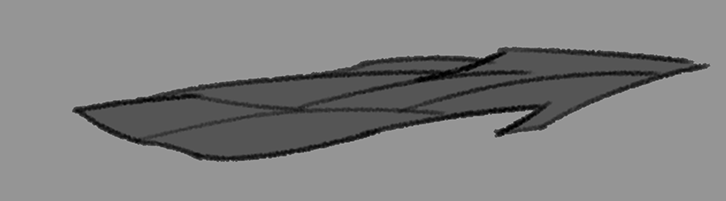
Aspects: Cluttered with debris, Signal interference, Slowly accelerating towards planet.

There are 25 zones in the field, in a grid 5 columns wide (A-E), and 5 rows deep (1-5). Row 0 (off the map) is “re-entry”. Ships moving off this side of the map are incinerated, crushed by gravity, and flattened by impact. This is an explicit character death outcome for anyone on said ship.

grid

Zones B4 and D2 contain Average density debris fields. Zone D2 also contains a Good Scale Makara Gunship in low power standby mode. If it succeeds in an Ops vs. Engineering contest (Fair Ops, contested Engineering of target ship), it switches to full power, and begins sweeping the area with Active Scanners.

Zones B3, C3, and C2 contain Fair density debris fields.  Zone C3 contains the MSN Parindra if Zone B2 has already been successfully scanned. If not, it contains the wreckage of the MSN Vrisakapi.

Zone B2 contains an Good density debris field. It also contains the MSN Parindra if Zone C3 has already been successfully scanned (so, whichever of B2 and C3 is successfully scanned first, it’s in the other one). Otherwise, it contains the MSN Vrisakapi.

Complications

  • The debris field zones shift one row down every one hour of real time elapsed (so, one hour after the start of the scene, the contents of zone B2 move to B1. After two hours, the new contents of B1 get incinerated).
  • The Makara Gunship will attempt to concede and retreat planetside, in the event of sustaining a Moderate Consequence in battle. Half an hour of realtime later, two fresh Gunships arrive in Zone E1, looking for a fight.
  • Kravyad boarders from Balor’s Fearsome Gaze identify the zone with the Parindra in it in round 5, and succeed in landing in the shuttle bay of the ship in round 10. The boarders are on a Average Scale Assault shuttle, with an effective Engineering of 4 to be detected. Start them as far away from the players, within the debris field, as possible in Round 1.
  • Moving through a debris field zone requires a Maneuvering test against the density of the field plus two (passive). Maintaining position within the debris field (unless safely docked) still requires a Maneuvering test, but only against the density without a bonus (passive).
  • A successful scanner (Ops) test against the density rating of the field will confirm whether the Parindra is in that zone. An unsuccessful test means that another round of scanning is necessary to confirm whether or not it’s in that zone.


Episode Three, Session Four

Scene Four: Interior, MSN Parindra.

Dark, Cluttered, Eerie.

Captain Chandra and Mala boarded the Parindra, while Captain Goff maintains a defensive perimeter aboard the Sulas Tine. Captain Mala’s two engineering crew take up positions on the engine deck to start assessing the damage, while Mala, Chabra, and Chabra’s security detail of four advance towards the bridge. Halfway there, the privateers encounter hostile entrenched Raksasa pirates. An attempt to parlay commences, but initial attitudes and relative offensive capabilities render the Kravyad resistant to Chabra’s attempts to suborn mutiny.

Episode Three, Session Three

Scene Three

The Gilgit Debris Field (Cluttered with debris, Signal interference, Slowly accelerating towards planet)

The Nina, Pinta, and Santa Maria (Marru, Vatya’s Vengeance, Sulas Tine; under captains Mala, Chabra, and Goff respectively), having identified the MSN Parindra in the graveyard of Janya and Abhva ships in an unstable orbit above Gilgit, move to intercept the Abhva Gunship which has just detected them. The hope is, the ship can be destroyed before it gets a chance to call for help (and likewise before the Raksasa assault shuttle full of hostile pirates that is currently docked with the Parindra has too much time to ready a defense).

Luckily, the aggressive nature of the Makara captain for the Gunship lends itself to this strategy. All three privateers spread out under the direction of Captain Chabra, pursuing an envelopment strategy against the larger and more heavily armed gunship. Captain Chabra, himself an ace pilot draws the fire of the Gunship, Captain Goff brackets the Gunship with her own fire, and Captain Mala takes advantage of the frenzied Makara by lining up his shots carefully (and accurately). While the privateers suffer some minor damage, the ending is never really in doubt as the privateers leave the disabled Gunship accelerating towards Gilgit even more quickly than the rest of the debris field.

Now, to board the Parindra, and restore her powerplant before she becomes a smoking crater on the surface of Gilgit…

Episode Three, Session Two

Scene Two: The debris field in a decaying orbit above the burning Gilgit hiveworld.

The three privateer vessels pass from the Empyrean to normal space, just beyond scanner range to the debris field. A cautious yet methodical.approach is executed, with increasingly thorough search attempts for the Parindra the deeper into the debris field the ships venture. All three ships fly in a tight formation, with overlapping scanner fields for maximum resolution.
A few minutes into the field, scanners flash white as an active scanner sweep of the debris field emanates from the planetside end of the field. Rigorous emissions control protocols keep the privateers from being detected.
A few more minutes, and the privateers have detected the cold, dark hull of the Parindra. Unfortunately, the Abhva Gunship lurking in the debris field has engaged in on again, off again contact with the Marru, and by the time all three ships are in position to possibly dock with the Parindra, it seems that someone else has beaten them to the prize….someone else in a Raksasa boarding craft.

Tuathanach and Ban-draoidh

In the language of Kéna, the term Tuathanach – translates literally to “the faithful”. This is the bulk of the remaining Kravyad people, equivalent to Kravyad Andhaka. Generally, this is abstracted to “Thugs” or “Primitives” to the Janya.

The Ban-draoidh is Kéna for “the wise”, loosely equivalent to Kravyad Siddha. Inevitably, these are Kravyad females. To the Janya, these are “Witches” or “Furies”. The Inquisition, charged with protecting the faithful from hostile or forbidden magics, tend to take an extremely dim view of the Ban-draoidh (as do the political houses of Mitrakam – every time there is a Kravyad rebellion, the Ban-draoidh  are at the heart of it).

Episode Three, Session One

Scene One:

A bustling Outcaste café on the Admiralty base on Betwa, “Eat at Jalal’s” asynchronously blinking courtesy of a photonic display on the outer wall. Inside, the smell of curried vegetables and crisp seafood protein. The high caste visitors currently consist of Captains Chabra and Mala, who are faintly pink with discomfort. Captain Goff sits in close council with her contact, Maruf Kazi of the Stone Brotherhood. Unlike her companions, she is not the least disconcerted by the dietary habits of secular Outcaste culture.

Maruf easily passes along a secondhand tale of the battle of the recently discovered Gilgit Abhva hiveworld. Unfortunately, due to the battered nature of the 2nd gen Navy ships used in the assault, many hands were lost in the battle that eventually did result in the central hive being breached and evacuations off the cold, dead world beginning. Pointed questions from Captain Goff tease out the segment of the debris field most likely to hold intact ships, and navigation details to enable close approach courtesy of Empyrean sail (a close approach that will drop the privateer flotilla practically on top of the debris field before orbital or planetary observers of the Abhva persuasion have a chance to spot them). Finally, some operational details of the MSN Parindra, and the MSN Vrisakapi, aging Light Cruisers whose powerplants could not sustain the intensity of the battle.

Now, to get to Gilgit before the MSN returns, or the Abhva sanitize the debris field on the way out…

…and Gender

The Janya are significantly egalitarian in gendered social norms as a practical matter; although masculine, feminine, and hijra (both/neither) social roles exist to varying degrees (most strongly in the Artisan caste, least so in the Savant caste), these are for the most part elective as opposed to assumed by biology. The Jangla language, while including gendered pronouns, can be easily used without them (and frequently is). English equivalents would be: He/She/Zhe, Him/Her/Zhim, His/Her/Zher, His/Hers/Zhers. Jangla does not include grammatical gender as noun classification (unlike the Latin, German, or French languages).

  • The appropriate term of address for any of the three genders in the Artisan caste is “Artīre”, abbreviate to “Ar.” as an honorific.
  • The appropriate term of address for any of the three genders in the Nobility or Cleric castes is “Nobilis”, abbreviated to “Ns.” as an honorific.
  • The appropriate term of address for someone of the Savant caste is “Sapere”, abbreviated to “Sa.” as an honorific.

On the matter of gender identification, Janya culture celebrates personal choice in the matter, although the Nobility caste practice of frequent (and apparently arbitrary) gender reassignment is seen as a somewhat bourgeois practice, although not a terribly surprising one. As a practical matter, transitions along any of the three axes are a relatively simple matter of Vivacism based Ayurvedic Technik, with a recovery time of a few weeks for full desired reproductive function to return.

The Kisiti, on the other hand, are a strongly matriarchal society. They have a pronounced tendency to reduce gender to a simple binary. When in doubt, they default to labeling strong Janya as “she”, and quiet Janya as “he”.

Third Incursion Travel Times – Yami

Quadrant Capitals to Inhabited Worlds, Travel time in Days

Month 0 2 4 6 8 10 12
Narmada to Maricha 10.8 9.6 8.2 7.8 9.0 10.3 11.3
Narmada to Subahu 13.2 13.3 13.3 13.2 13.1 12.9 12.7
Narmada to Raka 14.1 14.3 14.4 14.5 14.6 14.7 14.7
Narmada to Kaikasi 10.4 11.3 12.1 12.8 13.5 14.1 14.6
Kalindi to Maricha 11.8 11.7 11.1 10.0 8.6 7.8 8.5
Kalindi to Subahu 10.5 11.0 11.5 12.0 12.3 12.6 12.9
Kalindi to Raka 14.4 14.3 14.1 14.0 13.8 13.6 13.4
Kalindi to Kaikasi 15.5 15.7 15.9 16.1 16.1 16.1 16.1
Yamuna to Maricha 9.9 11.1 11.7 11.8 11.4 10.4 9.1
Yamuna to Subahu 5.7 4.9 5.1 6.0 7.0 8.0 8.8
Yamuna to Raka 9.8 9.3 8.8 8.3 7.7 7.1 6.5
Yamuna to Kaikasi 10.9 10.0 9.1 8.3 7.8 7.9 8.4
Sabarmati to Maricha 7.9 8.1 9.4 10.7 11.5 11.8 11.6
Sabarmati to Subahu 11.8 11.4 10.9 10.3 9.6 8.9 8.0
Sabarmati to Raka 8.8 9.3 9.8 10.2 10.6 11.0 11.3
Sabarmati to Kaikasi 10.9 10.0 9.1 8.3 7.8 7.9 8.4
Opposite Quadrants 14.2 14.2 14.2 14.2 14.2 14.2 14.2
Adjacent Quadrants 11.9 11.9 11.9 11.9 11.9 11.9 11.9
Inside Quadrant, max 8.8 8.8 8.8 8.8 8.8 8.8 8.8